
Context
The environment
Small and medium inventory operations need more than a product count. Stock changes are connected to suppliers, purchasing, warehouse locations, customer orders, returns, damage, staff responsibility, and reporting. The two-person team designed and implemented the system together.
Problem
What needed to change
Create a coherent operational system that keeps those workflows connected while giving different staff roles appropriate control and useful visibility into inventory status.
Constraints
- The domain spans many related entities and state transitions that must remain consistent.
- Administrative speed could not come at the expense of authorization and validation.
- Public evidence cannot expose real credentials, customers, suppliers, or business records.
- The primary delivery period must remain distinct from later dependency maintenance.
Contribution
My responsibility
- Shared domain modeling and product planning
- Warehouse, supplier, resource, role, and policy implementation
- Administrative CRUD workflows and validation
- Dashboard analytics and status visualizations
- Representative data seeding and operational scenario coverage
- Maintenance, dependency updates, and release fixes
Approach
How I structured the work
Connect the inventory domain
Model products, categories, warehouses, stock, suppliers, purchases, customers, orders, returns, and damages as related operational records rather than isolated CRUD screens.
Put authorization around administration
Use Filament Shield roles, Laravel policies, request validation, and scoped resources to make administrative access configurable and explicit.
Support operational movement
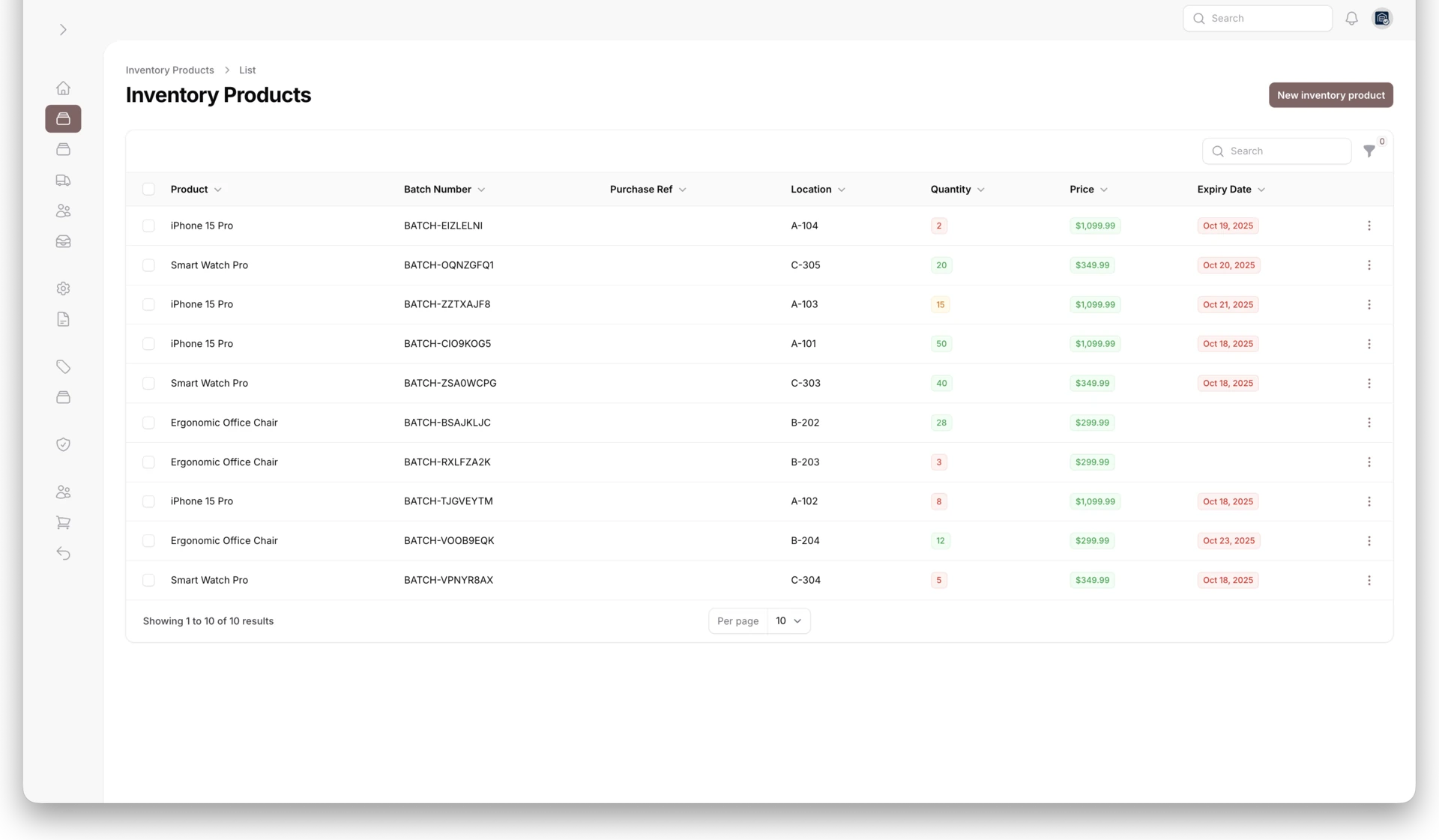
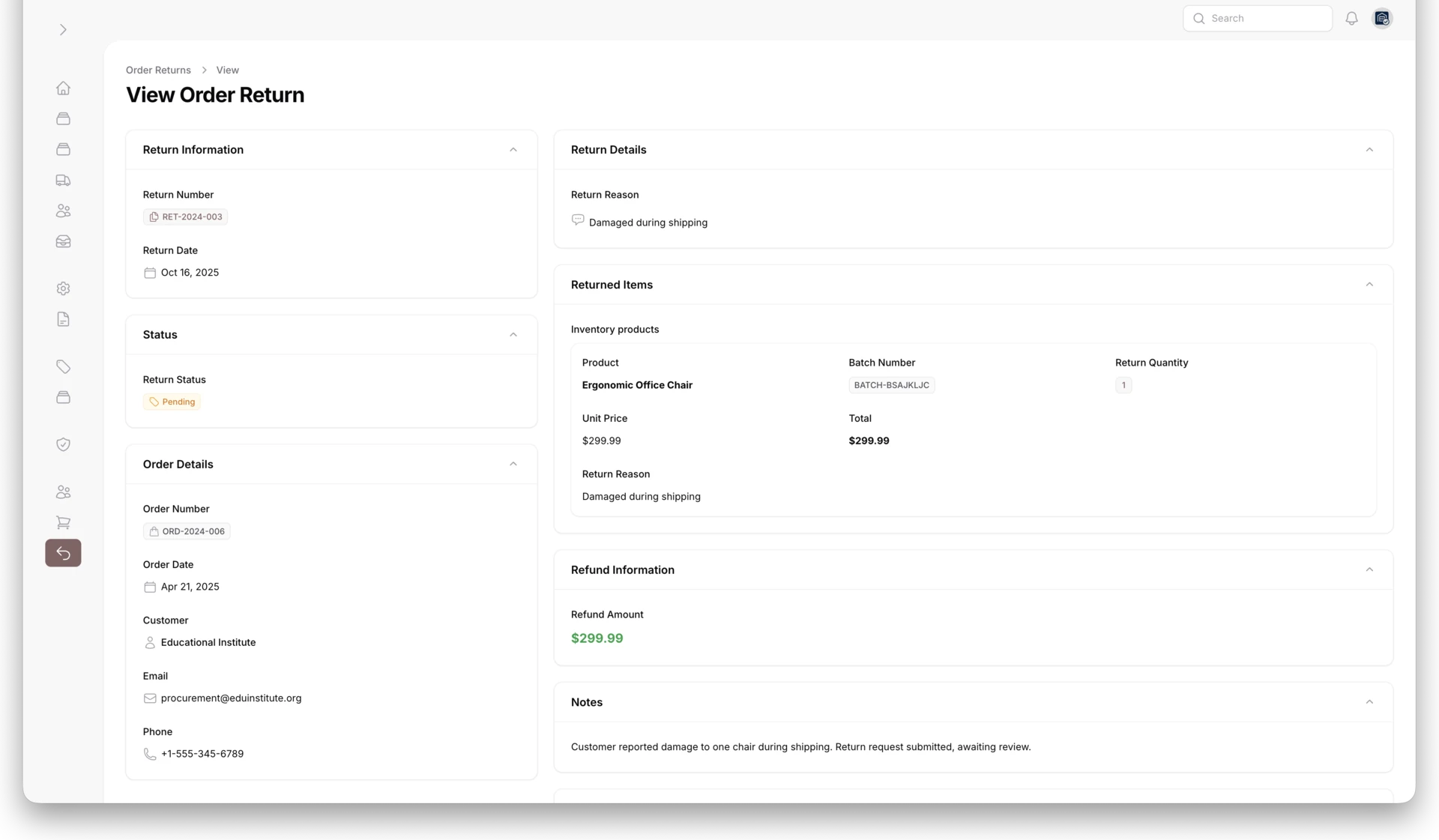
Add low-stock and expiry visibility, status-based order and return workflows, spreadsheet import and export, and Sanctum-backed API access.
Turn records into operating signals
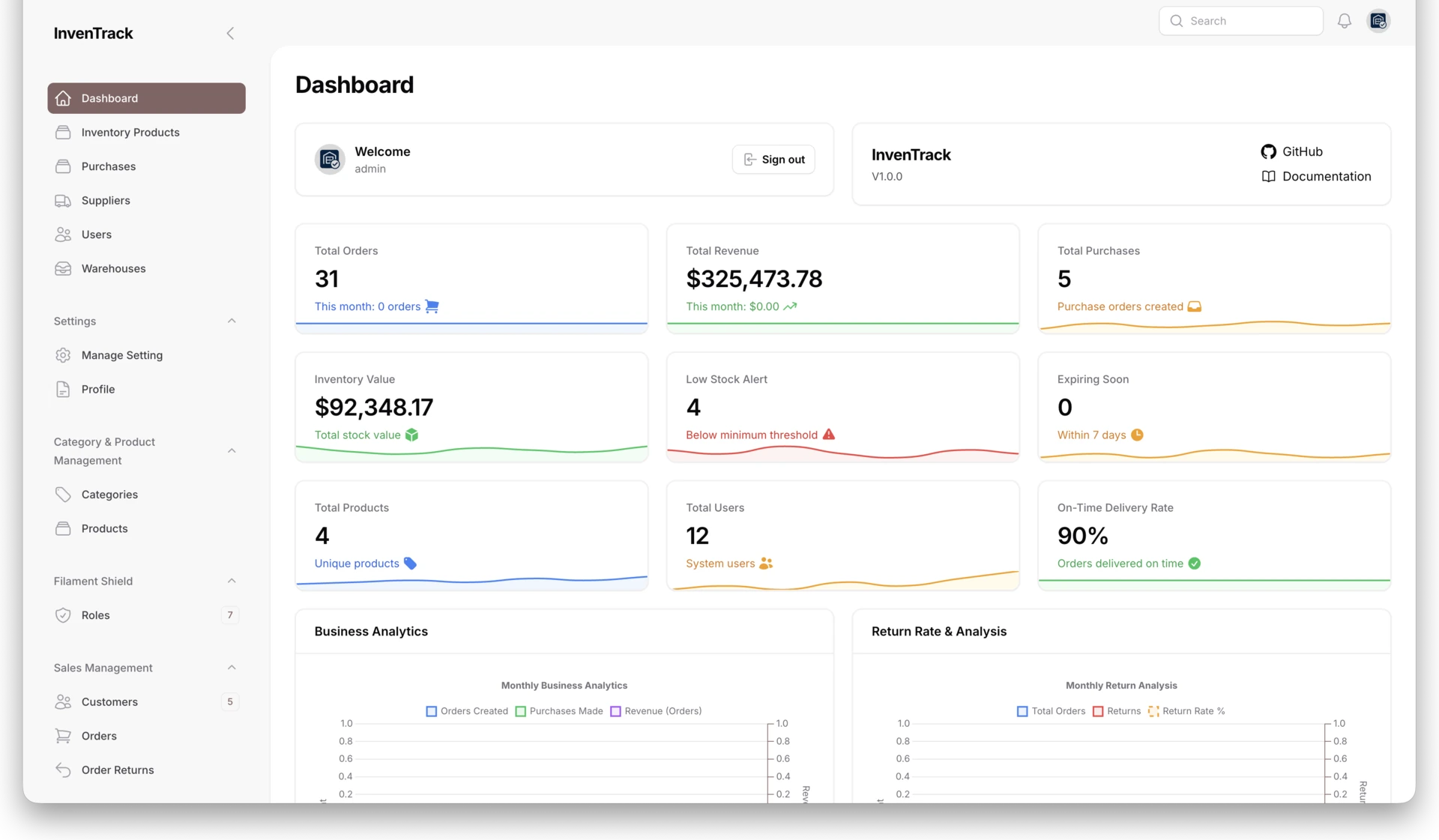
Build dashboard views for stock, purchasing, orders, revenue, payment state, returns, and product activity using representative seeded scenarios for safe validation.
Evidence
A safe view of the system
Outcome
What the work established
- Connected multi-warehouse stock with purchasing, fulfillment, returns, and damage workflows.
- Established configurable role and policy controls around administrative operations.
- Added imports, exports, APIs, alerts, and dashboards that make inventory records usable in day-to-day work.